Ever since Coriolis flow measurement technology gained mainstream appeal, industry has been working to capitalize on its advantages. Although Coriolis is clearly a highly advantageous solution for many critical flow measurement applications, it is not without its drawbacks.
Before we get into the dirty little secrets, let's discuss why Coriolis is a highly regarded measurement technique.
Coriolis flow meters measure the actual mass flow rate (pounds and kilograms) flowing through a pipe and are therefore resistant to external influences that can cause significant deviations in velocity-based flow measurement systems.
With Coriolis, there is no need to worry about pressure and temperature compensation. A pound of cold fluid weighs the same as a pound of hot fluid, and concerns about how much space a substance takes up in a pipe or how fast it flows are largely irrelevant for Coriolis measurements.
In terms of calibration, mass flow and total mass units are unaffected by temperature and pressure changes, and Coriolis meters require no conversion factors. Since Coriolis meters are not affected by changes in the flow curve, users do not need to worry about straight pipes before or after the measurement point. Coriolis didn't care at all what the flow curve was, because a bucket of water and sand weighed the same, regardless of whether the water was still or just swirling sand mixed together.
If the above advantages weren't enticing enough, Coriolis flow meters can accurately measure flow rate to 0.1% or better with repeatability, and, if equipped, they can also measure density, temperature, volumetric flow, and viscosity.
So, the question arises, why would anyone use anything else other than a Coriolis flow meter for flow measurement?
The first obstacle to Coriolis world domination can be summed up in one word: price.
The magic of Coriolis
The first obstacle to Coriolis world domination can be summed up in one word: price. For example, a one-inch line magnetic flow meter and transmitter can cost $3,000 or less. A Coriolis meter of similar size can cost $9,000 or more.
For anyone who has evaluated Coriolis meters in the past, this is probably not a dirty little secret.
However, more competitively priced Coriolis meters have entered the market recently, and some are even considered to be priced close to the realm of the traditional sensors they are meant to replace. These lower-priced Coriolis meters offer less accuracy, fewer features, and lack the solid displays of their pricier counterparts.
The advent of value-priced Coriolis meters is a response to market demand for price-sensitive Coriolis sensors. Pricing a sensor based on its base Coriolis performance alone gives you a good quality meter that performs the same as a base sensor at a slight price increase, but with huge gains in ease of use and performance.
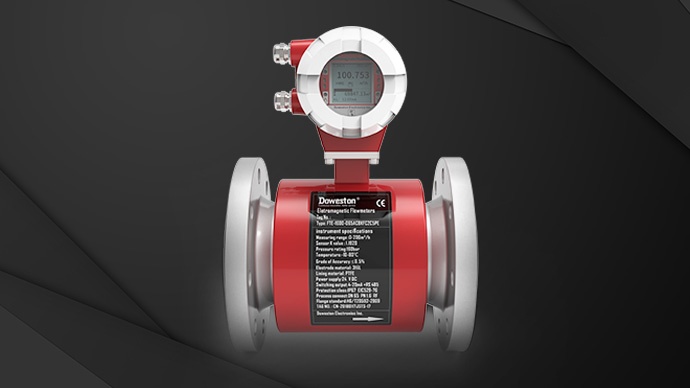
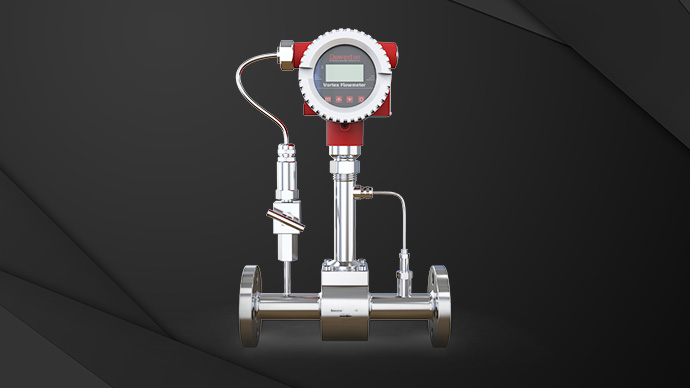
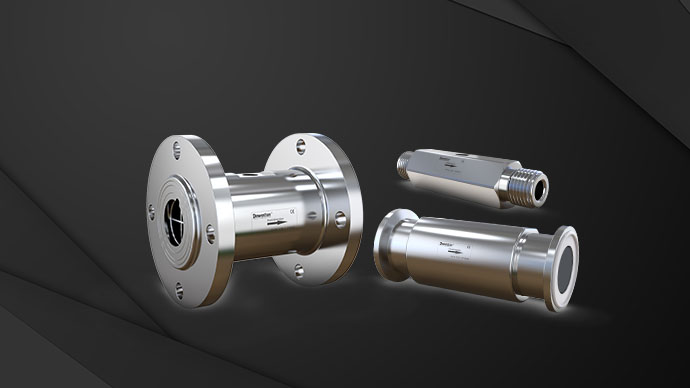
Doweston other types of flow meters
No one measurement technology is suitable for every industry, so you can choose the right flow meter from our comprehensive product range to meet your process measurement and control needs.
What are the challenges in Coriolis flow meter applications?
Another challenge faced by Coriolis flow meters is one of process noise. Coriolis meters hate process noise. Whether it's noise from a pump, a variable drive, or just footsteps on the catwalk, it can easily disrupt the precise measurements of a Coriolis sensor.
Because the Coriolis sensor is carefully monitoring and measuring small changes in the movement of the flow tube, the smallest external vibrations can be picked up and sampled, introducing offsets or errors into the calculations.
The challenge with Coriolis sensors is to maintain a high degree of sensitivity while sampling protective measures. The solution is to use a large number of filters that modify the digital signal or analog output to present the desired I/O characteristics.
Typically, filters are used to slow down or average output signals to stabilize them. In its more advanced state, the filter monitors the large amounts of data produced by modern Coriolis sensors and then uses adaptive algorithms to learn and contour the output as needed.
Filtration could have surprising implications for the usability of Coriolis sensors. However, the trade-off is that these features add expense and sometimes the complexity of using the sensor.
Coriolis flow meters are common in industry and water/wastewater treatment.
The challenge with Coriolis sensors is to maintain a high degree of sensitivity while sampling protective measures.
Coriolis mass flow meter Password 3
Directly related to the noise issue is the challenge of gas void fraction or two-phase flow. Two-phase flow is a state that occurs when gas (or voids) is entrained in a liquid flow or liquid is dispersed in a gas flow.
Initially, Coriolis sensors were prone to errors when flowing dense liquids such as water filled with light air masses. When these plugs pass through the vibrating tube of a Coriolis meter, they have a tendency to stall the meter and the meter must be restarted. However, Coriolis technology has evolved over the years, and newer equipment can handle entrained air with ease while maintaining accuracy and repeatability.
The concern with today's Coriolis meters is accuracy and repeatability when the percentage of gas content varies across the entire meter range.
Imagine a scale with a weight on it. The weight compresses the scale and the pointer shows the weight (mass). If you move the weight a little away from the scale, the scale loses its ability to measure mass.
In a Coriolis meter, when bubbles are suspended in the liquid flow in a Coriolis tube, and the bubbles are not touching the walls of the tube, then like a scale, the Coriolis meter cannot effectively measure mass. This is called decoupling.
Coriolis technology has evolved over the years, and newer equipment can easily handle entrained air while maintaining accuracy and repeatability.
The solution to this dilemma is not simple. Filters can be used, and adaptive algorithms can help ensure that the pipe maintains controlled movement. Sensors can be used to evaluate the properties of two-phase flow and estimate or calculate the mass that may escape measurement.
Ultimately, however, the nature of the two-phase flow can be infinitely diverse, and the Coriolis sensor must rely on its programming to evaluate the fluid flowing through the pipe. This often means that flow values with gas content varying over the instrument range can only represent actual values, while other times this representation may not be accurate.
DOWESTON provides you with high-precision temperature sensors, including thermal resistors and thermocouples, and provides temperature calibration services.
Our experts are ready to helpWherever you are, DOWESTON's experienced engineering team is ready to support your product selection and applications - contact us today!
Tell us about your measurement task and we will help with product selection and technical questions.info@doweston.com
We value your privacy!
We and our partners use cookies and similar technologies to process personal data (such as IP address or browser information) in order to personalize the content and advertising shown to you. This helps us display more relevant content and improve your browsing experience. We also use it to measure results and tune website content. Because we value your privacy, we are asking for your permission to use these technologies. You can change or withdraw your consent at any time by clicking the settings button in the lower-left corner of the page.





 Home