Temperature can be measured by a wide variety of sensors. allSensorThey all judge temperature by sensing certain changes in physical properties. The six sensor types that engineers are likely to encounter are as follows: thermocouples, resistance temperature detectors ( RTD-Resistance Temperature Detector And thermistors), infrared radiators, bimetallic devices, liquid expansion devices, and phase change devices. First, we provide a brief review of each sensor.
Thermocouples are primarily composed of metal strips or wires made of two different metals connected together at one end. As discussed later, temperature changes at this junction cause changes in the electromotive force (emf) between the other two ends. As the temperature increases, the output electromotive force emf of the thermocouple will also increase, but it is not necessarily a linear relationship.
Resistance temperature detectors take advantage of the fact that the resistance of a material changes with the temperature of the material. The two main types are metal temperature measuring devices (often called RTDs) andThermistor. As the name suggests, RTDs rely on changes in metal resistance, which increases more or less linearly with temperature. Thermistors are based on resistance changes in ceramic semiconductors; there is a non-linear relationship between resistance decrease and temperature increase.
Infrared sensors are non-contact temperature measurement devices. As discussed later, they determine temperature by measuring the thermal radiation emitted by the material.
Bimetallic devices take advantage of the differences in thermal expansion rates between different metals. Two pieces of metal are joined together. When heated, one piece of metal expands more than the other. The resulting bending is converted into a temperature reading through a metal rod connected to the pointer. These devices are portable and do not require any power supply, however they are generally not as accurate as thermocouples or RTDs and are less suitable for temperature recording.
Liquid expansion devices represented by household thermometers are usually divided into two categories: mercury-based and organic liquid-based. There are also types that utilize gases instead of liquids. Mercury is considered an environmental hazard, and there are regulations restricting the shipment of devices containing mercury. Liquid expansion sensors require no power source, pose no explosion hazard, and remain reliable even after repeated use. On the other hand, the data they produce is often not easy to record or transmit, and they cannot perform single-point measurements or spot measurements.
Phase change temperature sensors consist of labels, particles, pigments, paints or liquid crystals that change appearance when a certain temperature is reached. For example, they can be used with a steam trap where the white dots on the sensor chip attached to the trap will turn black when the trap exceeds a certain temperature.
Response times are typically a few minutes, so these devices typically do not respond to temperature transients and are less accurate than measurements made with other types of sensors. Moreover, the phase change is irreversible, except in the case of liquid crystal displays. However, even so, if it is necessary to confirm that the temperature of a piece of equipment or material has not exceeded a certain value during product transportation, for example due to technical or legal reasons, phase change sensors are still more convenient.
Main equipment
In the chemical industry, commonly used temperature sensors are thermocouples, resistance temperature detectors and infrared devices. There is a common misunderstanding about how these devices work and how they should be used.
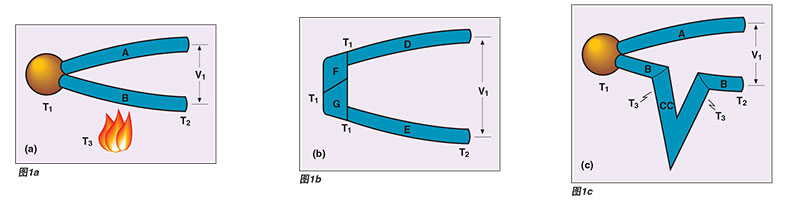
Thermocouples: Let's start with the thermocouple-perhaps the most commonly used but poorly understood device of the three. Essentially, a thermocouple consists of two pieces of alloy connected together at one end and open at the other end. The electromotive force emf at the output end (open end; V 1 in Figure 1a) is a function of the closed end temperature T 1. As the temperature increases, the electromotive force emf also increases.
Typically, thermocouples have a metal or ceramic sheath, which isolates the thermocouple from environmental factors. Metal-sheathed thermocouples also come with various types of coatings (e.g., Teflon) for trouble-free use in corrosive solutions.
The open end electromotive force is not only a function of the closed end temperature (i.e. the temperature at the measuring point), it is also a function of the open end temperature (T2 in Figure 1a). As long as T2 is always at the standard temperature, the measured electric current 1 is a direct function of the change. The industry-accepted standard for T2 is 0°C; therefore most tables and charts assume T2 to be this value. In industrial instruments, the difference between the actual T2 temperature and 0°C is usually corrected electronically within the instrument. This electromotive force emf adjustment is called cold junction or CJ correction.
Temperature changes in the wires between input and output do not affect the output voltage, provided the wires are thermocouple alloy or thermoelectrically equivalent material (Figure 1a). For example, if a thermocouple is measuring the temperature in a furnace, and the meter displaying the reading is some distance away, the wire between the two can pass near the other furnace and be unaffected by the temperature of the furnace, unless the furnace becomes hot enough to melt the wire or otherwise permanently alter the wire's electrothermal behavior.
As long as the temperature T1 remains constant across the junction and the junction material is conductive, the composition of the junction itself does not have any influence on the thermocouple behavior (Figure 1b). Likewise, adding non-thermocouple alloy to either or both wires will not affect the reading, provided that the temperature of both ends of this "adulterated" metal is the same (Figure 1c).
The ability of thermocouples to work with "adulterated" metals in the transmission path allows the use of many specialized devices such as thermocouple switches. Although the transmission wire itself is usually the thermoelectric equivalent of a thermocouple alloy, for the thermocouple switch to function properly it must be made of gold or silver plated copper alloy with appropriate steel springs to ensure good contact. As long as the temperatures at the switch input and output junctions are the same, changes in their composition will have no effect.
It is important to understand the law of continuous thermocouples. In the two elements shown in the upper part of Figure 1d, a thermocouple has a hot end temperature of T1 and an open end temperature of T2. The second thermocouple has a hot end temperature of T2 and an open end temperature of T3. The electromotive force emf of the thermocouple measuring T1 is VF1; the electromotive force emf of the other thermocouple is V2. The sum of the two electromotive forces emf, that is, V1 + V2, is equal to the electromotive force V3. V3 is the total electromotive force generated by the thermocouple working between temperatures T1 and T3. According to this law, a thermocouple specified for one open-end reference temperature can be used at different open-end temperatures.
RTD: A typical RTD consists of a thin platinum wire wrapped around a mandrel and covered with a protective coating. Typically, the mandrel and coating are made of glass or ceramic.
The average slope of an RTD's resistance versus temperature plot is often called the alpha value (Figure 2), where alpha represents the temperature coefficient. The slope of a given sensor depends to some extent on the purity of the platinum in it.
CompareA commonly used standard slope associated with a specific purity and composition of platinum is 0.00385 (assuming resistance is measured in ohms and temperature is measured in degrees Celsius).
The resistance versus temperature curve plotted using this slope is the so-called European curve because RTDs of this composition were first widely used in continental Europe. Complicating the picture is the fact that there is another standard slope associated with a different platinum composition that is not very different. This slope has a slightly higher α value of 0.00392 and follows the so-called American curve.
If an α value is not specified for a given RTD, this value is typically 0.00385. However, it is prudent to determine this, especially when the temperatures to be measured are relatively high. This is demonstrated in Figure 2, which shows the European and US curves for a more widely used RTD (i.e., 100 ohms resistance at 0°C).
Thermistor: The resistance of a thermistor is inversely proportional to temperature, and this relationship is highly nonlinear. This created a serious problem for engineers who had to design their own circuits. However, this difficulty can be alleviated by using thermistors in pairs so that their nonlinearities cancel each other out. Additionally, manufacturer-supplied panel meters and controllers can internally compensate for the thermistor's lack of linearity.
Typically, thermistors are named according to their resistance value at 25°C.CompareA commonly used rated resistor is 2252 ohms, and others are 5,000 ohms and 10,000 ohms. Most meters will accept a Type 2252 thermistor unless otherwise specified.
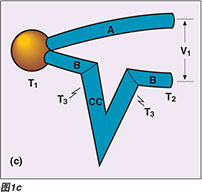
Figure 1. Assuming certain conditions (in the text) are met, thermocouple performance is not affected by changes in wire temperature (a), junction composition (b), or the addition of non-thermocouple alloys to the wire (c). Also detailed in the text is that thermocouple readings can be accumulated (d).
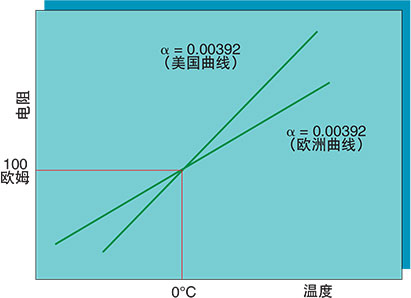
Figure 2. A given RTD has one of two standard resistance versus temperature relationships, often called a-value. Especially when making high-temperature measurements, a wise engineer would not use an RTD without understanding its a-value.
Infrared sensor: Infrared sensors measure the amount of radiation emitted by a surface. All matter, regardless of its temperature, emits electromagnetic energy. In many machining processes, the energy is in the infrared region. With temperature
Infrared sensor: Infrared sensors measure the amount of radiation emitted by a surface. All matter, regardless of its temperature, emits electromagnetic energy. In many machining processes, the energy is in the infrared region. As the temperature increases, the amount of infrared radiation and its average frequency increase.
Different materials emit radiation with different efficiencies. This efficiency is quantified as emissivity, a decimal number between 0 and 1 or a percentage between 0% and 100%. Most organic materials, including skin, are extremely efficient, often having an emissivity of 0.95. On the other hand, most polished metals tend to be inefficient emitters at room temperature, typically having an emissivity or efficiency of 20% or less.
To function correctly, infrared measuring equipment must take into account the emissivity of the surface being measured. This emissivity can usually be found in reference tables. However, please keep in mind that this table cannot account for specific conditions such as oxidation and surface roughness. When the emissivity is unknown, a sometimes practical method of measuring temperature is to "force" the emissivity to a known level by covering the surface with masking tape (95% emissivity) or painting it with highly radioactive paint.
Some sensor inputs may indeed include energy not emitted by the device or material on which the measurement surface is located, but rather energy emitted by other devices or materials reflected off the measurement surface. Emissivity relates to the energy emitted by a surface, while "reflectivity" relates to the energy reflected from another source. The emissivity of an opaque material is an inverse indicator of its reflectivity; materials that are good emitters do not reflect too much of the incident energy and therefore do not cause too much of a problem for the sensor in determining the surface temperature. In contrast, when measuring a target surface with a very low emissivity (for example, only 20%), much of the energy reaching the sensor may be reflected energy, such as energy emitted by a nearby furnace of another temperature. Simply put, it is the energy emitted by a high-temperature, pseudo-reflective target.
Infrared devices are like cameras and therefore have a certain field of view. For example, an infrared device can "see" a 1-degree viewing cone or a 100-degree viewing cone. When measuring a surface, make sure that the surface completely fills the field of view. If the target surface does not initially fill the field of view, move closer or use an instrument with a narrower field of view. Or just take the background temperature into account when reading the instrument, that is, adjust based on the background temperature.
Selection guide
RTDs are more stable and reliable than thermocouples. But on the other hand, as a category, RTDs have a narrower temperature range: RTDs have an operating range of -250 to 850°C (-418 to 1562°F), while thermocouples have a range of approximately -270 to 2,300°C (-457 to 4172°F). Thermistors have a smaller operating range, typically between -40 ~150°C (-40 ~ 302°F), but are highly accurate within this range.
Thermistors and RTDs share a very important limitation. They are resistive devices, so they work by allowing current to flow through the sensor. Even though very small currents are typically used, some heat is generated and can cause erroneous temperature readings. This self-heating effect in resistive sensors is significant when measuring stationary liquids (i.e. liquids that are not flowing or agitated) because the heat generated is not easily dissipated. Thermocouples are essentially zero-current devices and therefore do not suffer from this problem.
Infrared sensors, although relatively expensive, are well suited for measuring extremely high temperatures. They can measure temperatures up to 3,000°C (5,400°F), well beyond the range of thermocouples or other contact-type devices.
Infrared measurement is also attractive when you do not want to touch the surface to be measured. Therefore, fragile or wet surfaces (such as painted surfaces fresh from a drying oven) can be monitored using this method. Substances that are chemically active or produce electrical noise are well suited for infrared measurements. The infrared method is also advantageous when measuring the temperature of very large surfaces (such as walls) that require a large number of thermocouples or RTDs.





 Home


