To understand the radar level meter, we first start to understand the principle of the radar level meter!
The radar level meter antenna emits a very narrow microwave pulse, which travels through space at the speed of light and contacts the surface of the medium being measured. Some of its energy is reflected back and picked up by the same antenna. The running time can be converted into a level signal by electronic components. A specific time extension method can ensure the stability and accuracy of measurements over a long period of time. Even if the working conditions are complex, there are still false echoes. With the help of new microprocessing technology and debugging software, the echo of the target layer can be accurately analyzed.
The antenna receives the reflected microwave pulses and transmits them to the electronic circuit. The microprocessor processes the signal and identifies the accurate echo signal generated by the microwave pulse on the material surface. Intelligent software is used to complete the identification, and the identification accuracy reaches millimeter level.
Why can it solve problems that ultrasound cannot?
Because radar does not rely on medium propagation, it is an electromagnetic wave that does not require air or conductors as a medium. This allows radar level meters to be well used in situations where the space propagation medium is unstable and the space environment is limited.
Compared with ultrasound, it can handle high temperature, high pressure, vacuum, high humidity and other occasions.
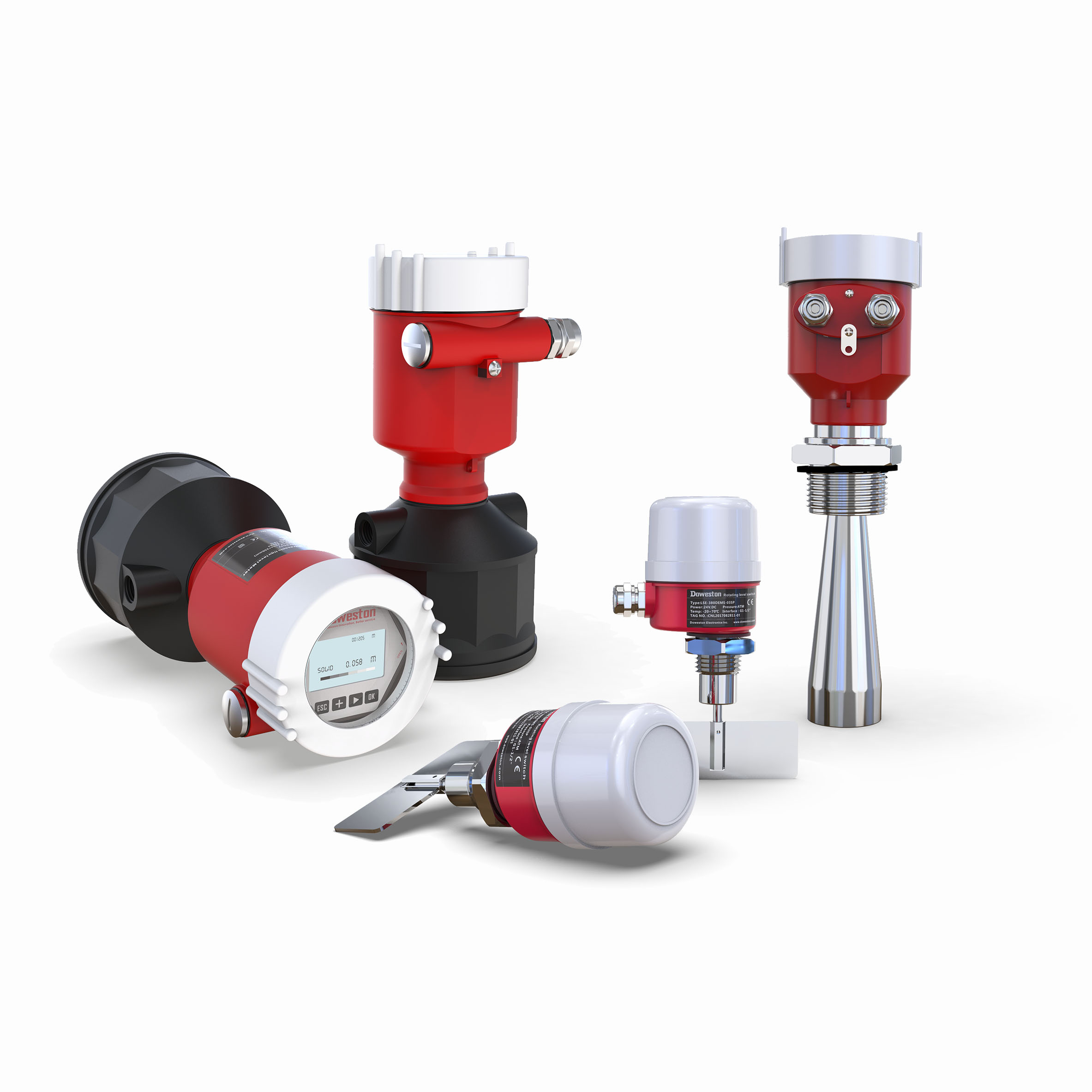
Application of radar level meter
Different radars have different antenna styles and are suitable for different occasions. The conical antenna is suitable for installation at the bottom of the fuel tank or on the waveguide, and is suitable for applications with a small measurement range. Parabolic antennas are suitable for liquid and solid measurement applications. Due to its smallest diameter, the radar beam is the narrowest and can be used for ultra-long-range measurements of parabolic antennas with the least complex contamination. It can be applied to light antenna bonding liquids such as asphalt and liquid sulfur. The rod antenna is large in size and only the Teflon material is exposed to the tank's atmosphere. Rod antennas are suitable for measurements of medically demanding or corrosive chemical materials. For low-precision radar level gauges, the measurement principle is frequency modulation time-interval wave type. For storage tanks with low viscosity and difficult to condensation such as fuel and asphalt, in addition to parabolic antennas, other storage tanks use elliptical antennas. The internal floating roof oil tank uses a waveguide design to achieve accurate measurement of the tank's liquid level. A local indicator on the ground shows the liquid level. Convenient for on-site operators to check.
Get information
Doweston sensor data is being sent for free 






 Home


