Since their emergence, sensors have been widely used in various products and technologies and have become an indispensable part of terminal equipment. As the cycle goes by, the Internet era transforms, although sensors begin to be combined with the Internet of Things to form part of intelligent collaboration. However, the public suddenly discovered that the sensor industry is still very small, has no big brands, is highly dependent on imports and other difficulties. After the just-concluded 2019 Chongqing Smart Expo China Smart Expo Sensors and Internet of Things Summit Forum, many experts gathered together to make suggestions and discuss changes in the sensor industry. This article will review the history and current situation of sensor development from the perspective of technology and industry. Through interviews and discussions with experts, it will analyze the future industry trends in the sensor field. It is hoped that it can help more people understand the sensor field and have a better understanding of industrial sensors.
Technology enables people's circle of competence to continue to expand. If machines expand human physical strength and computers expand human intelligence, then ubiquitous sensors will greatly expand human perception.
Sensor is not a new word, but a very traditional common word, defined as "a device that receives power from one system and transmits it to a second system, usually in another form". According to this definition, the function of a sensor is to convert one form of energy into another form of energy, so many scholars also use "sensor" to refer to "sensor".
In short, a sensor is a detection device, usually composed of a sensitive element and a conversion element. It measures information and allows users to perceive information. Through conversion, the data or value information in the sensor can be converted into electrical signals or other required output forms to meet the requirements of information transmission, processing, storage, display, recording and control.
In fact, sensors have always been present in your life, covering different scenarios such as remote control, desk lamps, mobile buttons, TVs, boiler detection, power grid transmission, medical device diagnosis, etc. It can be said that sensor technology and sensors are an inseparable part of the product.
From the perspective of technology and application type, sensors are divided into temperature, pressure, ultrasonic, flow, resistance, image sensors, etc.; from the perspective of disciplines, including acousto-optical electronics, sensors are also divided into chemistry, physics, biological sensors, etc. From the perspective of industrial layout, sensors are divided into four categories: consumer, automotive electronics, industrial and medical sensors. Sensors have been around in various forms since the first thermostat came on the market in 1883. With the development of the times and the continuous advancement of Internet of Things and artificial intelligence technology, smart sensors are introduced to the market and widely used in Internet of Things technology projects.
As a weathervane in the technology industry, related sensing technologies were mentioned many times in last year's and this year's "MIT Technology Review" TR10 (the world's top ten breakthrough technologies), and "sensor city" is one of the most representative breakthrough technologies. Deeptech once mentioned that integrating a large number of smart sensors into the entire urban scene is like installing new digital limbs and senses on top of it. Everything can be connected, sensed and controlled, and the operations of the city will be taken over by an extremely powerful artificial intelligence. At present, sensor technology is still widely used in the implementation of related products and urban planning purposes.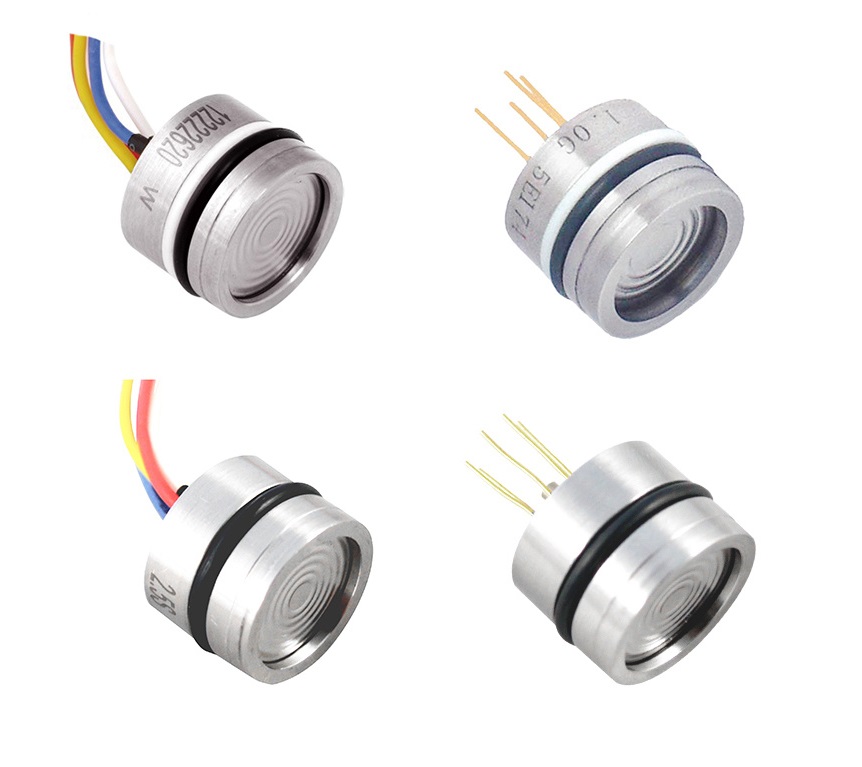
Of course, sensors have other serious challenges. Due to high investment, compared with the application of sensors and sensor technology in Europe and the United States, some sensors and sensor technologies in our country are relatively backward.
Yang Xueshan, former vice minister of the Ministry of Industry and Information Technology and honorary director general of the China Sensor and Internet of Things Industry Alliance, said in his speech that although sensor technology continues to advance, my country's sensor industry started late, lacks corresponding talents, and still relies on imports. Our country's independent technological innovation and sensor production products are in a blank state in the high-end field.
This article will review the history and current status of sensor development from a technical and industrial perspective, and analyze future development trends.
In the next chapter we will introduce you to the history of sensors and sensing technology
Introduced in 1883, the world's first thermostat was officially launched. It was created by an inventor named Warren S. Johnson. This thermostat based on sensors and sensing technology maintains a certain temperature accuracy. At the time, this was a very powerful technology.
Get information
Doweston sensor data is being sent for free 






 Home


