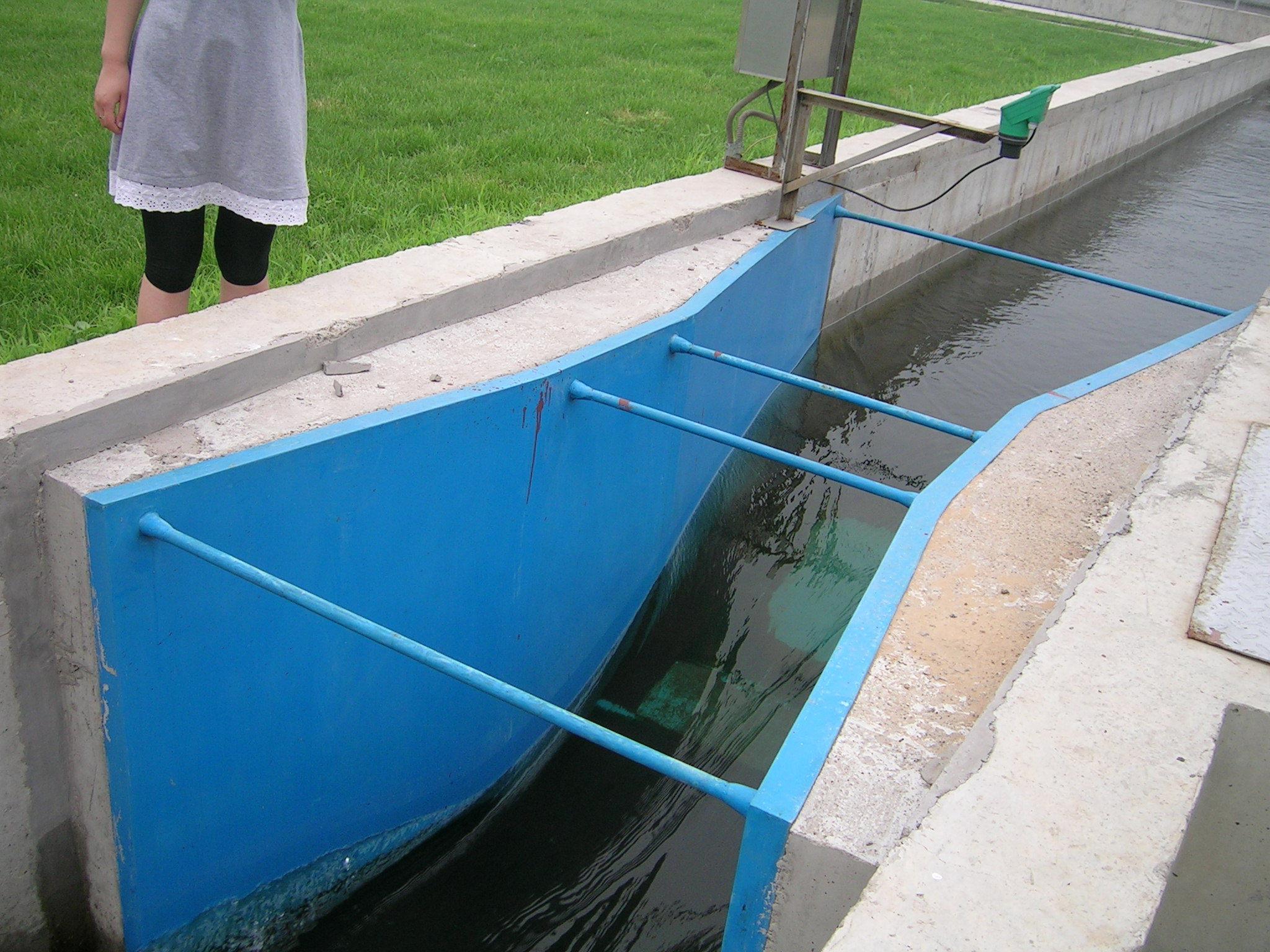
Open channel flow occurs when a liquid flows in a conduit or channel with a free surface. Rivers, streams, canals, and irrigation ditches are examples of open channel water flow. What makes this terminology somewhat confusing is that liquid flow in a partially filled pipe without being filled to pressure is also considered open channel flow. For example, water flowing through a culvert under a street is considered open channel flow. Likewise, flows in sewers and tunnels and other enclosed waterways that are partially enclosed are also classified as open channel flows. Other examples of open channel water flow include water flow in water treatment plants, stormwater and sewerage systems, industrial waste applications, wastewater treatment plants, and irrigation systems.
A very common method of open channel flow involves the use of hydraulic structures such as weirs or flumes. These hydraulic structures are called primary equipment. The primary device is a limiter placed in an open channel with a known depth-discharge relationship. Once a weir or flume is installed, measurements of water depth are used to calculate flow. Charts are available that relate various water depths to flow rates, taking into account the different types and sizes of weirs and flumes.
A weir is similar to a dam placed over an open channel. It should be positioned so that liquid can flow over it. Weirs are classified according to the shape of their openings. Weir types include: V-notch; rectangular; and trapezoidal.
Water depth is measured at a specific location upstream of the weir. Equations used to determine flow rates are associated with each type of weir.
A flume is a specially shaped portion of an open channel whose area or slope differs from the slope or area of the channel. As a liquid passes through the tank, its velocity increases and its level rises. To determine flow, the liquid depth is measured at designated points in the tank. Equations are relevant for each type of tank, taking into account the size of the tank.
Product Features:
◆ Wall-mounted integrated quick installation
◆ Built-in surface flow velocity to point flow velocity mapping algorithm
◆ Can measure forward and reverse two-way flow velocity
◆ RS485 interface and standard ModBus protocol
◆ Unique structural design to deal with siltation and blockage
◆ Adjustable and controllable emission logic reduces device power consumption
◆ One-time feedback of flow rate, water level, instantaneous volume and cumulative volume
Application scope: Food, pharmaceutical and (petroleum) chemical industry, unsatisfied pipe measurement Flow measurement and control of normally open river channels Sewage treatment plant drain outlet Chemical wastewater and medical wastewater outlet Open channel flow detection
Flow can be measured without hydraulic structures such as weirs or flumes. In the area velocity method, the average flow velocity across a cross-section is calculated and then multiplied by the flow area. Typically, this method requires two measurements - one to determine the average velocity and another to determine the flow depth. The area velocity method can be used for temporary flow measurements when a weir or flume is not actually in use. Examples include tidal ingress and infiltration studies and sewer flow monitoring.
The increasing demand for water flow due to population growth and environmental regulations is a significant driving force behind the open channel flow meter market. In addition to population increases, unusual weather patterns causing droughts and dry water beds are becoming more common. This is true in the United States and in other parts of the world. Just like oil and gas must be measured when ownership changes, water needs to be measured when ownership is transferred from one person or entity to another. Trade diversion of water is a vital measure, along with trade diversion of oil and gas.
Pressurized closed-pipe flows attract a lot of attention, while open-channel flow measurement is an exciting area that deserves closer study. Although it may be difficult to master at first due to the differences in methods, this diversity also provides room for new techniques. As with closed-tube flow, many of the recent developments revolve around enhanced electronics and improved communications. There is room for truly novel developments involving new sensor technologies or improvements to existing sensor technologies. Doppler technology has made some improvements to this type. Keep an eye out for further developments as companies compete for a growing market.
Our experts are ready to helpWherever you are, DOWESTON's experienced engineering team is ready to support your product selection and applications - contact us today!
Tell us about your measurement task and we will help with product selection and technical questions.info@doweston.com
We value your privacy!
We and our partners use cookies and similar technologies to process personal data (such as IP address or browser information) in order to personalize the content and advertising shown to you. This helps us display more relevant content and improve your browsing experience. We also use it to measure results and tune website content. Because we value your privacy, we are asking for your permission to use these technologies. You can change or withdraw your consent at any time by clicking the settings button in the lower-left corner of the page.





 Home