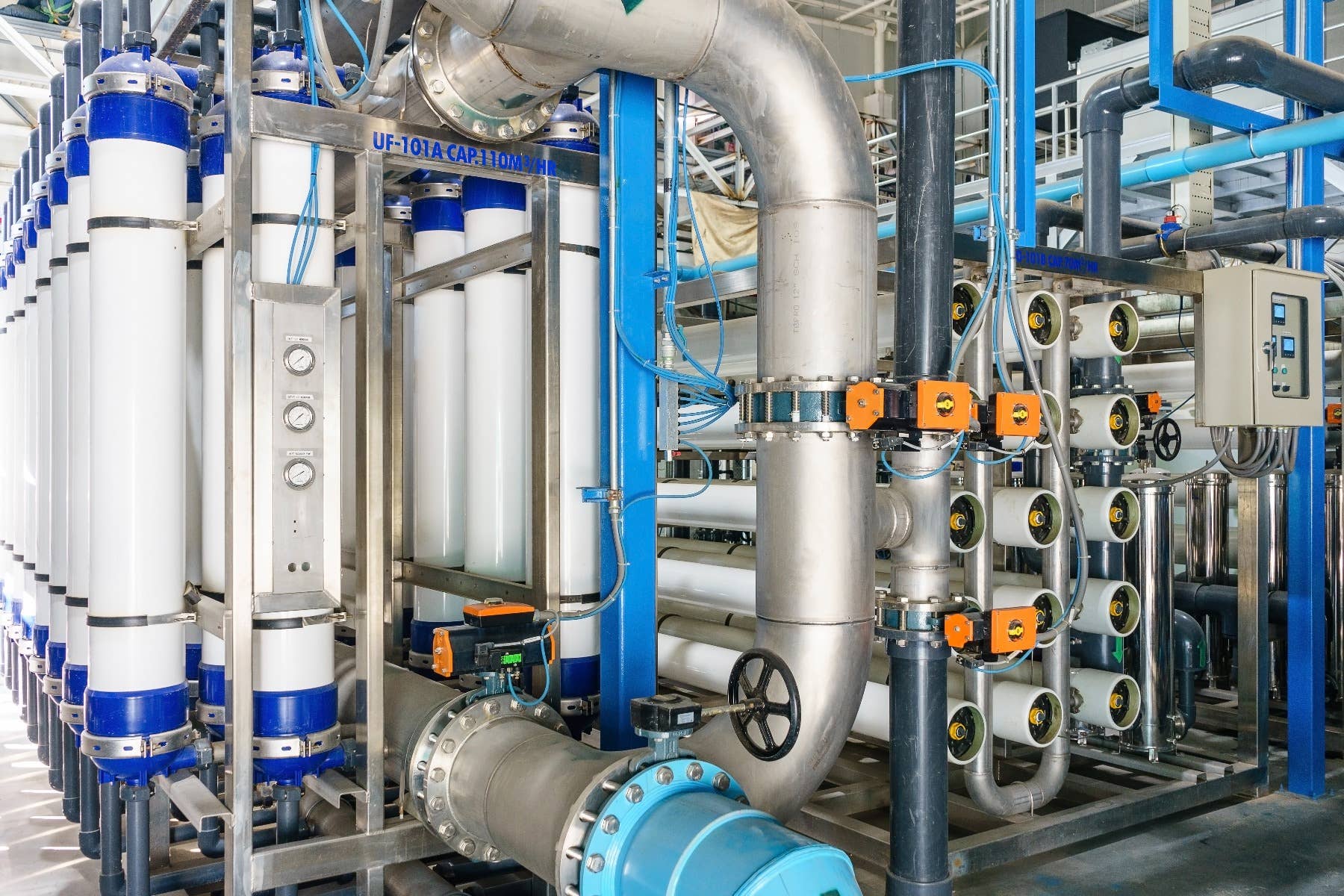
The choice of component materials is almost always a compromise between performance and cost.This article outlines some considerations when selecting a suitable pressure transmitter for seawater applications, such as in ballast water management systems or desalination plants.
From a performance perspective, the best solution for any corrosive media application is to use titanium because of its excellent corrosion resistance.The biggest disadvantage of titanium is that the cost of the material itself is high, and so are the processing costs.As a result, engineers seek more cost-effective solutions that still meet the application's requirements.
In many cases, 1.4404 (AISI316L) is used because it offers reasonable corrosion resistance at a fairly low price, only slightly better than basic stainless steels such as 1.4305.However, experience in the field shows that pressure transmitters made from this very common material may fail prematurely due to corrosion.Generally, the higher the temperature and/or the higher the salt or corrosive content, the faster the failure.
Trafag customers use pressure transmitters for 1.4404 (AISI316L) desalination units and work well in most cases.But in equipment used in tropical areas, some transmitters corrode in a relatively short period of time.Customers have been looking for a better alternative to AISI316L and for cost reasons titanium was not an option.Trafalgar offers pressure transmitters with ceramic sensors and 1.4462 duplex steel process connections and housings for such applications.This has been the perfect solution for all of this customer's critical equipment over the years and equipment equipped with duplex steel pressure transmitters works even at high temperatures or with high salt content.
A pressure transmitter made of 1.4462 duplex steel might be the ideal solution for all situations, but unfortunately, the cost of duplex steel is slightly higher, and the processing of duplex steel is very expensive.Due to its mechanical properties, it can cause excessive tool wear and reduce machining speeds, making parts expensive and costly, somewhere between AISI316L and titanium.Therefore, in this case, engineers also need to carefully evaluate the risks of the application and strike a balance between higher cost and higher performance (i.e., corrosion resistance in this case).
However, for higher temperatures, higher salt concentrations, or other corrosive components in the liquid, there is still only one safe option: titanium.
Reverse osmosis systems for drinking water plants.DOWESTON PD210C is available in different steel materials according to different applications.The sample passed the salt spray test IEC 60068-2-52, severity level 1;1.4305 standard steel, 1.4404 (AISI 316L), 1.4462 duplex steel (from left to right).
Our experts are ready to helpWherever you are, DOWESTON's experienced engineering team is ready to support your product selection and applications - contact us today!
Tell us about your measurement task and we will help with product selection and technical questions.info@doweston.com
We value your privacy!
We and our partners use cookies and similar technologies to process personal data (such as IP address or browser information) in order to personalize the content and advertising shown to you. This helps us display more relevant content and improve your browsing experience. We also use it to measure results and tune website content. Because we value your privacy, we are asking for your permission to use these technologies. You can change or withdraw your consent at any time by clicking the settings button in the lower-left corner of the page.





 Home