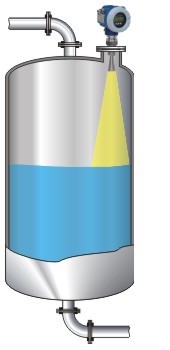
Radar level transmitters operate using high-frequency radar pulses that are emitted by an antenna and reflected from the product surface. The flight time of a reflected radar pulse is proportional to the distance traveled. If the tank geometry is known, the level can be calculated from this variable.
Advantages of radar level transmitters
Very accurate - ±0.5mm (0.02in)
Top installation
Contactless
Accuracy is not affected by dielectric constant, density and conductivity
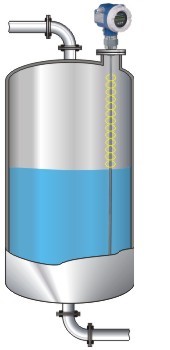
Guidance radar level transmitter with along probe guidanceHigh frequency radarPulses work together. When a pulse strikes the surface of a medium, the characteristic impedance changes and a portion of the transmitted pulse is reflected. The instrument measures and analyzes the time between pulse emission and reception and directly measures the distance between the process connection and the product surface.
Advantages of Guidance Radar Level Transmitter
Very accurate - ±0.2mm (0.04in)
Works with some foam
Top installation
Accuracy is not affected by dielectric constant, density and conductivity
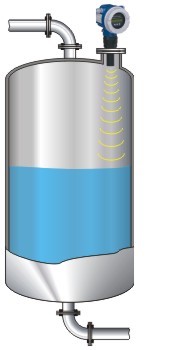
Ultrasonic measurements are based on the time-of-flight principle.SensorUltrasonic pulses are emitted, reflected by the medium surface, and detected again by the sensor. The required flight time is a measure of the distance traveled with an empty tank. Subtract this value from the total height of the tank to get the level.
Advantages of Ultrasonic Level Transmitter
Contactless (lowest cost)
Top installation
Accuracy is not affected by density changes, dielectric or conductivity
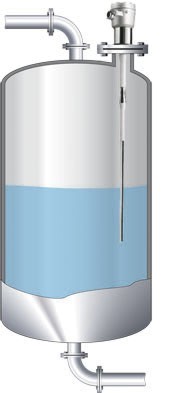
Principle of capacitive level measurementBased on changes in capacitance of the capacitor due to changes in liquid level formed by the probe and container walls. When the probe is in the air, the measured capacitance is lower. Once the container is full, the wider the probe's coverage, the greater the capacitance of the capacitor. A capacitance probe can be compared to a capacitor. As the tank fills, the probe's capacity increases. This change was analyzed electrically.
Advantages of Capacitive Level Transmitters
Very cost effective
Established principles
fast response
Interface measurements possible
High temperatures and pressures may be present
Things to consider:
Many versions
Conductor/Insulator
Probe Coatings - Chemical Compatibility
Ground reference tube
Nonmetal
Recalibrate with different media
Minimum span 10 pF
Bubbles can be a problem
Choosing a product doesn't have to be complicated!
Our experts are ready to helpWherever you are, DOWESTON's experienced engineering team is ready to support your product selection and applications - contact us today!
Tell us about your measurement task and we will help with product selection and technical questions.info@doweston.com
We value your privacy!
We and our partners use cookies and similar technologies to process personal data (such as IP address or browser information) in order to personalize the content and advertising shown to you. This helps us display more relevant content and improve your browsing experience. We also use it to measure results and tune website content. Because we value your privacy, we are asking for your permission to use these technologies. You can change or withdraw your consent at any time by clicking the settings button in the lower-left corner of the page.





 Home