Selecting the correct water quality sensor for the application, sensor location, mounting options, and understanding maintenance requirements are critical to successful online water quality monitoring and process control.
In ammonia-based aeration control, accurate, reliable data provided by an ammonium analyzer or sensor is critical to monitoring and controlling aeration. A common mistake in the sensor selection process is selecting the wrong sensor technology for the application. There are often multiple techniques for measuring parameters, and each technique is usually better suited for a specific application.
For example, there are two online measurement technologies available for ammonium, and it's not always easy to determine which is right for your application. This blog discusses online ammonium measurements, available techniques, and recommendations on when to use each type.
ISE Sensors and Wet Chemistry Analyzers
Online ammonium measurement techniques can be divided into two types: Ion-selectiveelectrode sensor(ISE) and wet chemistry analyzers. Although both have their place in wastewater monitoring, they are two very different technologies.
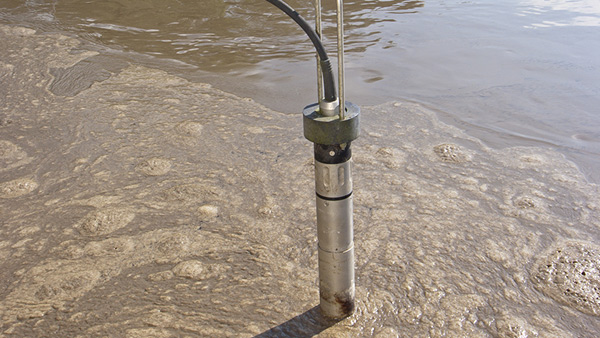
Let's first discuss the more common form of ISE sensor. The ISE sensor utilizes two electrodes to generate an electrochemical signal (mV). One electrode contains a selective membrane for ammonium ions only, and the other electrode outputs a stable reference signal.
The difference between the potentials, or millivolts, from each electrode produces a differential mV signal that increases or decreases depending on the ammonium content of the water. The mV signal of the electrode is continuously converted to ammonium (mg/L-NH4-N) concentration using the Nernst equation and a reference sample for calibration. To maintain the accuracy of the sensor, the differential signal must be routinely calibrated with a reference sample to the ammonium concentration.
Ammonium ion ISE sensors are popular in wastewater due to the tremendous benefits they can bring to the treatment process at an affordable price. By taking continuous ammonium measurements, aeration can be automatically controlled immediately and proportionally to the incoming ammonium load.
This strategy allows the device to be as efficient as possible with ventilation, reducing energy costs with minimal investment in ISE sensors and controllers. These sensors can be immersed directly into the process from the railing, making installation and maintenance easy. The ISE sensor requires some maintenance, including occasional manual cleaning, calibration via reference samples (matrix adjustment) and electrode replacement.
Each process can be completed quickly and easily on site. The ammonium ISE sensor has a wide measurement range and, if properly maintained, can provide accurate, stable readings up to 1000 mg/L; however, the disadvantage of the ammonium ISE sensor is its low concentration. When the concentration is always close to zero (below 0.5 mg/L NH4-N), the sensor will have difficulty calibrating to the reference sample and will drift faster. Likewise, at these lower concentrations, the effects of interfering ions will significantly affect the ISE measurements.
Potassium, for example, has similar properties to ammonium ions and will cross the membrane, causing positive interference. At low ammonium levels, this effect is dramatic. YSI's online ammonium ISE sensors are unique in that they automatically compensate for potassium by using an additional potassium electrode in the sensor, which provides more accurate measurements compared to non-compensated ISEs.
In contrast, online ammonium wet chemistry analyzers provide robust, automated colorimetric analysis of wastewater samples.
Ammonium analyzers typically use the Berthelot/Indoxyl (blue) method, which uses a reagent to convert ammonia into the blue indoxyl ion. The blue color produced is proportional to the amount of ammonium in the sample, and the spectrophotometer in the analyzer measures this color by absorbance. The Berthelot method is less susceptible to interference and therefore has greater stability at low concentrations compared to ISE technology.
With automatic calibration and automatic cleaning functionsOnline water quality analyzer, such as YSI Alyza, provide accurate, stable readings even at low concentrations. Short-term maintenance requirements for an online ammonium analyzer can be minimized if the analyzer has these features.
Automatic cleaning and calibration means there is little maintenance required on the equipment other than occasional filter cleaning. Maintenance requirements for a filtration system are highly dependent on the application and the type of filter used, which depends on each manufacturer. All online ammonium analyzers require more long-term maintenance such as reagent changes, filter changes, and component changes compared to ISE sensors. The Alyza-NH4 requires no manual operation compared to most analyzer models, with reagents changed every three months at 10-minute measurement intervals.
Wet chemistry analyzers do have some disadvantages compared to ISE sensors. Most importantly, online analyzers often have more specific installation requirements. Due to their large size, sufficient railing or wall space must be available for installation, which can be difficult in wastewater treatment facilities.
In addition, due to the more stringent temperature requirements, wet chemistry analyzers are best installed in a temperature-controlled environment, such as a building. The analyzer must also be at a certain distance (usually within 20 m) from the sample entry point to pump the sample to the analyzer. Finally, with ISESensorIn comparison, the cost of wet chemistry analyzers is usually higher, which is why ISE is used more frequently.
The most common mistake made by facilities wanting to measure ammonium is to use an ISE sensor with concentrations consistently below 0.5 mg/L NH4-N. Many wastewater treatment plants reduce ammonium levels to near zero by terminating activated sludge treatment (ASP) with an aerobic zone. The end of the ASP is a common location for using an ISE sensor to ensure low ammonia water output or to be used as a feedback signal for ammonia-based aeration control. The sensor may not recognize spikes in ammonium due to calibration and stability issues associated with low concentration ISE.
One possible adjustment is to not remove all ammonium salts in the ASP but to control aeration at the end of the water basin with a set value of 1 mg/L NH4-N, thereby further saving aeration costs and providing the ISE with a suitable environmental sensor.
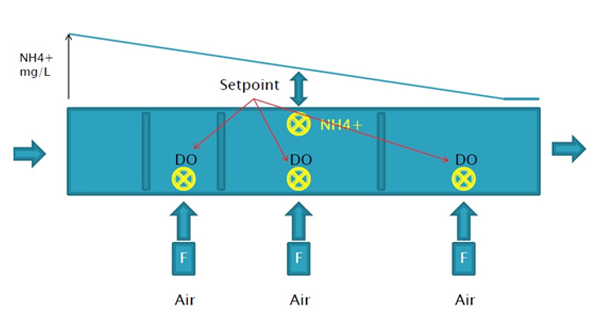
Another option is to move the ammonium ion ISE further upstream of the ASP, where the ammonium ion concentration is consistently above 1 mg/L (see Figure 1). The upstream ammonium set point can still use waterfall logic to ensure lower ammonium levels at the end of the basin. Furthermore, sensors that can control ventilation more efficiently will be easier to calibrate to reference samples, have more stable readings, and provide more useful data at these locations.
Figure 1: Aeration controlled by an ammonium set point in the middle of the activated sludge tank can provide better energy savings, as well as higher quality data from ISE sensors (Source: Owsenek, B., Using ammonia-based aeration control at a 54-mgd water recycling facility, WEA 2013 Annual Meeting, Virginia).
At the end of the aeration tank at low concentrations, the use of a wet chemistry ammonium analyzer is more effective than an ISE sensor. Higher stability at lower levels means the analyzer will respond to occasional ammonium spikes. A disadvantage of the analyzer may be the measurement period of the system. The 10-minute cycle time still controls ventilation, but the response is not as fast as the ISE sensor.
One of the best applications for online wet chemistry ammonium analyzers is compliance assurance for effluent from wastewater facilities. Ammonium salt concentrations in wastewater effluent are typically low, which means operation of ISE sensors can be challenging. However, Alyza-NH4 in plant wastewater can provide accurate ammonia readings as low as 0.02 mg/L NH4-N. The low solids content will also make the filtration system easy to maintain.
Let DOWESTON sales engineers choose an online water quality analysis sensor that suits you
Our experts are ready to helpWherever you are, DOWESTON's experienced engineering team is ready to support your product selection and applications - contact us today!
Tell us about your measurement task and we will help with product selection and technical questions.info@doweston.com
We value your privacy!
We and our partners use cookies and similar technologies to process personal data (such as IP address or browser information) in order to personalize the content and advertising shown to you. This helps us display more relevant content and improve your browsing experience. We also use it to measure results and tune website content. Because we value your privacy, we are asking for your permission to use these technologies. You can change or withdraw your consent at any time by clicking the settings button in the lower-left corner of the page.





 Home