Home
Odor control in wastewater treatment plants
Odors from wastewater treatment plants are naturally caused by the anaerobic treatment of wastewater. The most common odor is caused by hydrogen sulfide, although other chemicals are also present in smaller concentrations. All of these odor-causing chemicals have very low detection thresholds. In the range of one part per billion. These odors are emitted at multiple points during the wastewater treatment process.
Odor control systems are often used when wastewater treatment plants are located near cities and residential areas. Various odor control methods are available.
Wet scrubber treatment
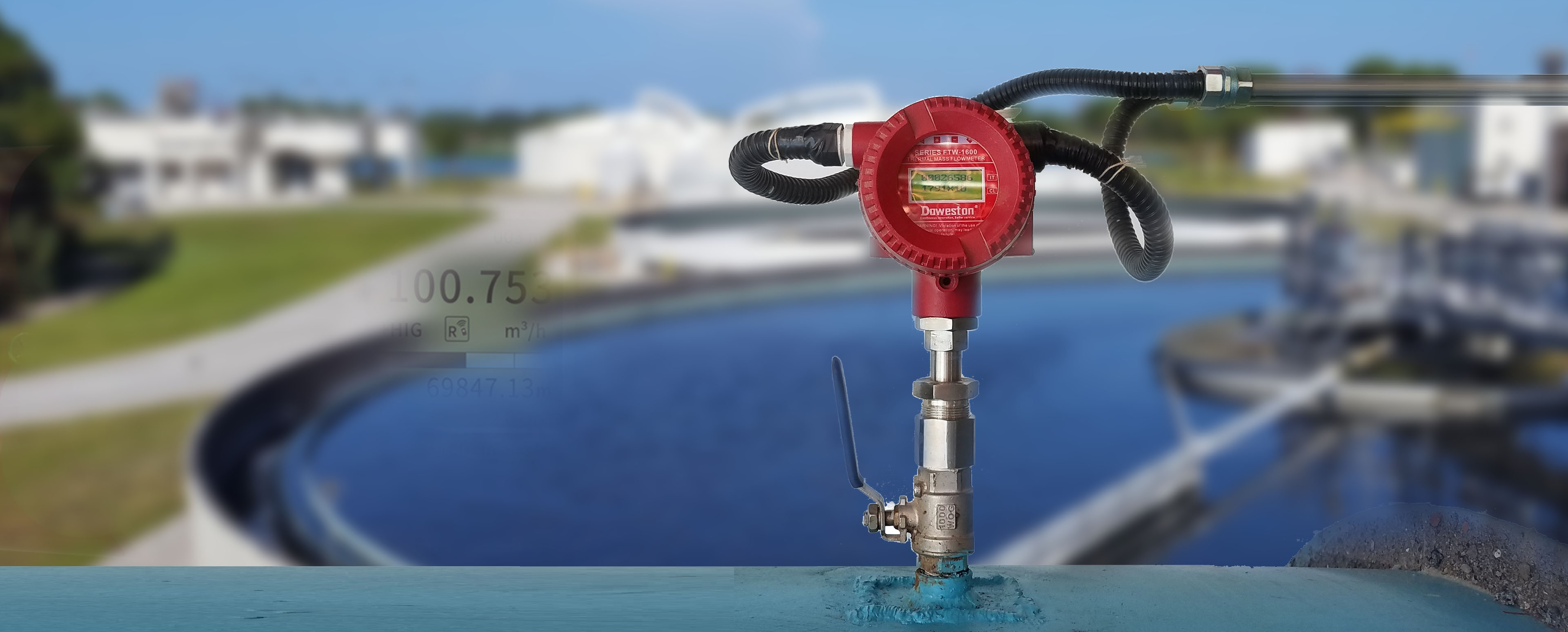
To ensure that all odors are fully captured, the wastewater treatment facility will cover various sources that may emit odors; these include areas such as water storage tanks, aeration basins, clarifiers, and sludge thickeners. The collected odorous air is then treated using various methods, the most common being wet scrubbers or activated carbon adsorbers. DOWESTON's FTW-1600 Series Insertion Flow Meters are ideal for ensuring the correct amount of air is drawn in from a variety of sources. Additionally, since multiple scrubbers or adsorbers are used, insertion thermal flow meters are used to balance the flow into the individual units.
Odor neutralizing
Various chemicals can be used to neutralize any odor. These chemicals can be evaporated into a stream of air to disperse and then injected into the desired location. Thermal flow meters play an important role in ensuring that the appropriate amount of air is used and that the air flow is evenly distributed where there are multiple injection points.